

What’s in a Squat? Let’s have a closer look:
Squatting is one of those exercises that some of us find tricky to do, but it’s an important one for toileting. Learning to squat can be fun and engaging for kids – it is a great position for lots of activities, as it helps you get up close without needing to sit on the ground.
Why is it important for toileting?
The position we adopt when we have a bowel movement (opening our bottom hole for a poo) can either help us let our poos out or make it much harder. If our pelvic floor muscles are pulled tight, our bottom hole (rectum) tightens. This is important when we do not want to open our rectum as it helps us remain continent, particularly on our busy days.
When we need to empty our bowels, we want the pelvic floor muscles to relax; to lengthen or stretch. This helps us to open our rectum and with gravity we can more easily release our poos at the desired time and location – and without straining! Traditionally humans would squat to wee and poo and it is only in relative recent history that toilets have been employed.

Image and Reference: https://motipt.com/constipation/
| Fun Fact: the Scots (in a Neolithic settlement dating back to 3000 BC) built the first known toilets. |
How may it help my child?
Many children with or without additional needs regularly present to clinicians with chronic constipation due to a complex range of differences and literal impacts on their bowel function. Improving the mechanics of healthy bowel emptying to a squat posture can help with:
- Stretching tight muscles to open the rectum
- Reduce straining
- Speed up defaecation – so less time is spent pooing and more time can be spent playing
Research has also identified that squatting:
- Helps the thighs to put gentle pressure on the abdomen
- Reduces straining and takes less time to poo (Sikirov, 2003).
- Lowers abdominal pressure – suggesting less effort for bowel emptying (Tashiro et al, 2020).
- Stretches the muscles around the hips, bottom and lower back
- Research has demonstrated that there is a positive link between squatting-based exercises and reducing daytime and night-time incontinence in children. (Garcia-Fernandez and Emanuel Petros, 2020)
How to teach a squat?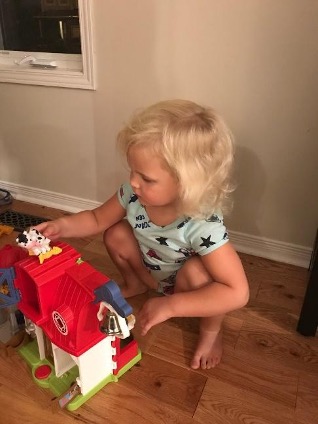
This video has some great tips on helping little ones learn to squat. We find that the best way to teach a squat is to have your child get into the squat position while doing games that they already enjoy.
Fun activities that can be completed in a squat position:
- Floor puzzle
- Fishing game
- Building towers – e.g. Duplo, magnetic blocks
- Drawing on the floor – chalk, painting
- Animal jumps – frog, rabbit
- Crouching and jumping games
- Twister game
- Playing the drums on the floor
- Playing in sand
| Fun Fact: 315 AD, Rome had 144 public toilets. The Romans treated going to the toilet as a social event. They met friends, exchanged views, caught up on the news and wiped themselves with a piece of sponge fixed to a short wooden handle. |
If you are already working with other health professionals, a physiotherapist or exercise physiologist may be able to provide more tips relevant to your child. If you or your child needs further support, see or GP or book in with one of our occupational therapists today! Please also check out our other online resources for more information about toileting positioning and how to use a stool to enable squatting:
Sitting on the Toilet Poster FREE DOWNLOAD
Toilet Tips for Kids BLOG
ROS PULLMAN
Occupational Therapist.
Reference links: https://www.bbuk.org.uk
https://motipt.com/constipation/


