
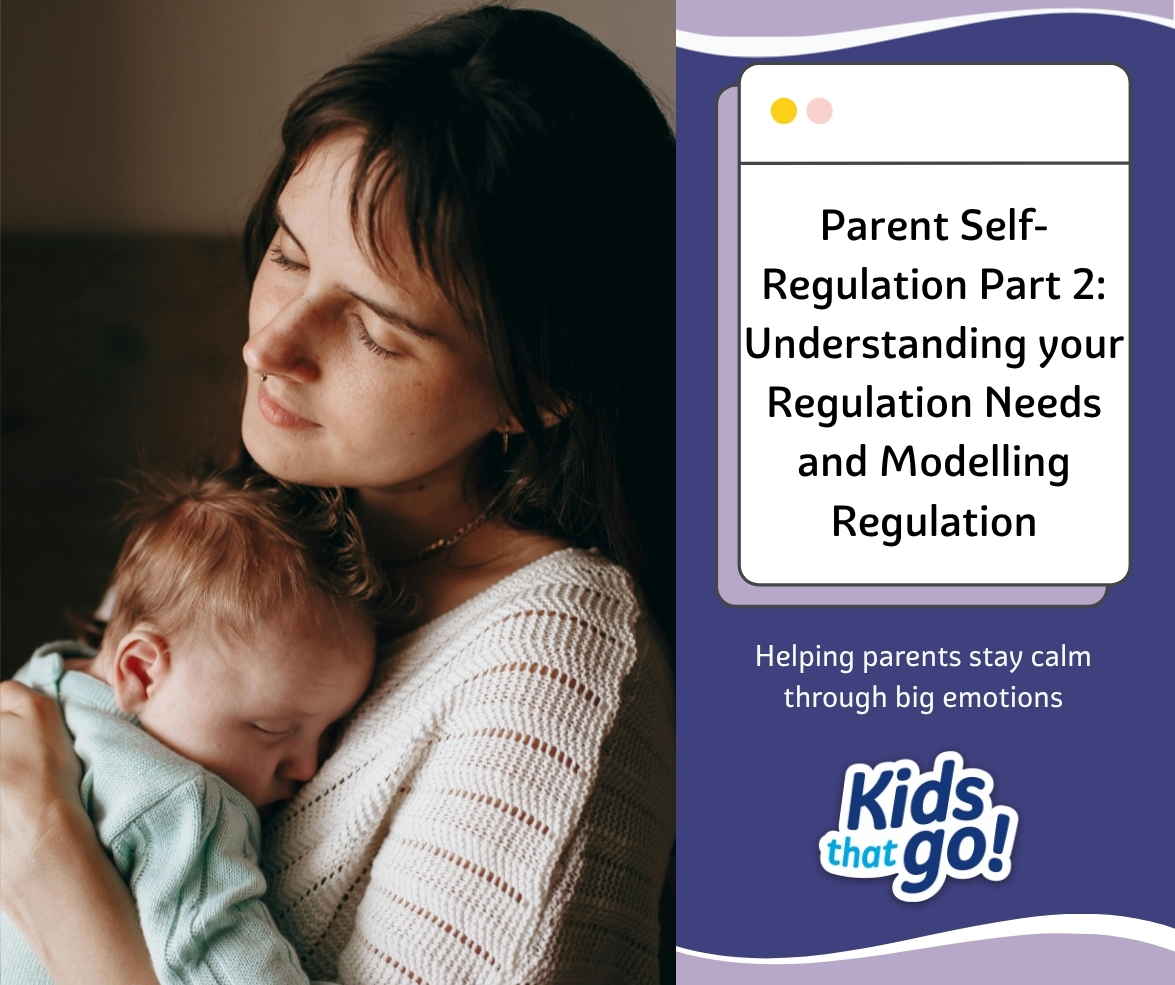
In Part 1, we introduced the idea of “shark music” – your internal alarm system that can be triggered in parenting moments. One of the key ways to better understand your shark music is by getting to know your sensory preferences and sensitivities. When you understand what regulates your body, you can then effectively model meaningful strategies to your child.
Understanding Your Own Sensory Preferences
Just like children, adults can be sensitive to different types of sensory input. This may include sound, visuals, touch, movement, smells, or taste. Busy environments, loud noises, time pressure, or even your child’s distress can activate your nervous system and make your shark music louder.
Take a moment to reflect:
- What situations make you feel overwhelmed, tense, or reactive?
- Are there specific sounds, behaviours, or environments that trigger stress?
- What do you notice in your body when you start to feel dysregulated? (e.g. tight chest, fast heartbeat, clenched jaw)
Understanding what dysregulates you helps you anticipate when your shark music might show up. Equally important is knowing what regulates you; what helps your body feel calmer, steadier, and more in control.
This might include:
- Taking slow breaths
- Stepping outside for fresh air
- Moving your body or stretching
- Having a moment of quiet
- Drinking cold water
When you know both your triggers and your supports, you are better equipped to respond intentionally in challenging moments.
Modelling Regulation: The Most Powerful Teaching Tool
Children learn regulation through co-regulation before self-regulation. This means they need to experience calm with you before they can do it independently. When your shark music is activated and you choose to use a regulation strategy, you are not just managing the moment, you are actively teaching your child how regulation works.
Using interoceptive language (talking about what is happening inside your body) helps your child build awareness of their own internal signals. It also shows them that all bodies have feelings and that we can respond to them in helpful ways.
You might say:
- “My heart is beating fast, I think my body is feeling upset. I’m going to take a slow breath.”
- “I’m noticing my body feels floppy, I think I am feeling tired. I’m going to take a break.”
- “My breathing is getting faster, I think I am feeling angry. I’m going to drink some water”
This helps your child connect: body signals → feelings → strategies
By making your internal process visible, you are teaching your child that regulation is something we practice and not something we’re expected to get right every time.
Practicing Alongside Your Child
Regulation is not something children learn in isolation, but rather develops through shared experiences.
You can support this by:
- Practicing strategies together when you are both feeling calm (e.g., breathing, stretching)
- Using shared language about body signals
- Reflecting together after moments of dysregulation (“What helped your body feel better?”)
Final Thoughts
Understanding your own regulation needs is a powerful step in supporting yourself and your child. When you notice your shark music, understand your triggers, and actively use strategies to support your body, you are doing more than managing your response – you are building your child’s lifelong regulation skills. And importantly, you are showing them that regulation isn’t about being perfect, it’s something we practice together.
If you would like to learn more about supporting your child with their big emotions, see our blog post about co-regulation.
Natalie Arthy
Occupational Therapist


